

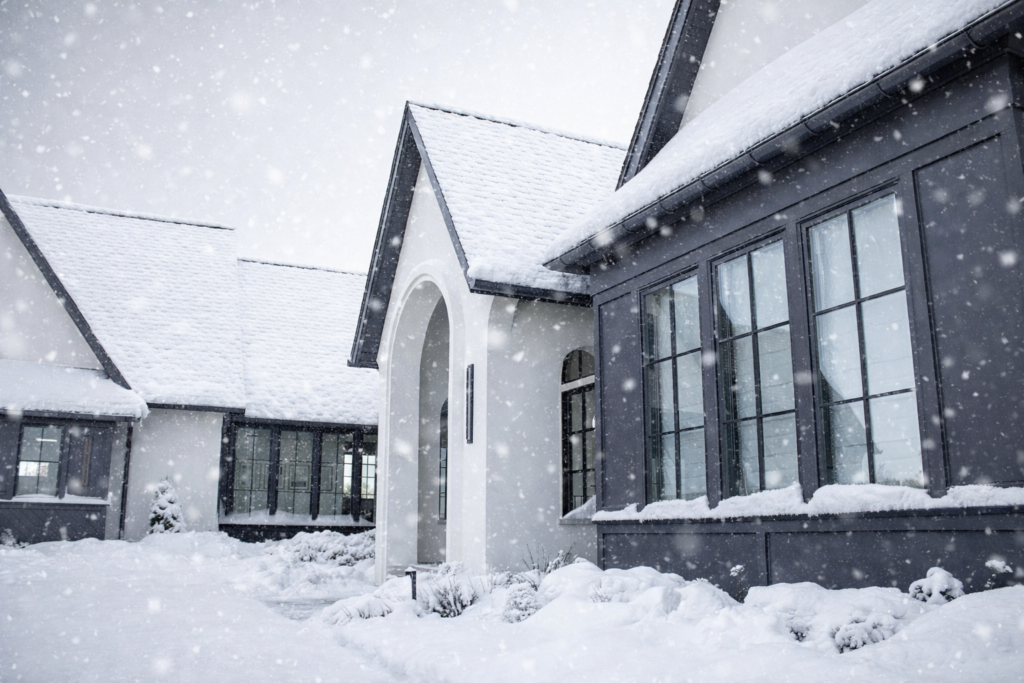
Stucco is a strong exterior finish, but Minnesota winters expose a lot of its weak points. Cold temperatures, moisture, and constant freezing and thawing can turn small stucco issues into serious damage if they are ignored.
At Donnelly Stucco and Exteriors, we see winter related stucco problems every year across Minneapolis, St. Paul, and the Twin Cities. In many cases, the damage started small and got worse over time.
Why Winter Is Hard on Stucco
Stucco naturally develops small cracks as buildings settle and age. During winter, those cracks allow moisture to get behind the stucco system. When that moisture freezes, it expands and causes the damage to spread.
Common winter stucco issues include cracking that continues to widen, moisture trapped behind the walls, bulging or soft areas, and damage around windows, doors, and roof lines. These problems are often happening below the surface before anything obvious appears.
What to Watch for During the Winter
Even in cold weather, there are signs that stucco problems are developing. Homeowners and property managers should watch for new cracks, staining or discoloration, pieces of stucco breaking loose, or moisture showing up inside near exterior walls.
These are usually signs of water intrusion, not just surface wear.
Keep Snow and Ice Away From Stucco
Snow sitting against stucco for long periods allows moisture to soak in. This is especially common near foundations and walkways.
Shovel snow away from exterior walls when possible and keep snowbanks a safe distance from the building. Make sure gutters and downspouts are directing water away, not letting it drain back toward the stucco.
Avoid Winter Stucco Repairs
Stucco repairs should not be done in freezing temperatures under normal conditions. Materials will not cure correctly and quick patches often trap moisture inside the wall, which leads to more damage later.
The only way stucco can be properly repaired during winter is if the work area is fully wrapped, sealed, and consistently heated to the correct temperature for curing. This is a controlled process and should only be handled by experienced professionals. When this is not possible, it is best to schedule an inspection and plan repairs for warmer weather.
Why Early Inspections Matter
Putting off stucco problems during winter often leads to bigger repairs later. Small cracks can turn into widespread damage, moisture can lead to rot or mold, and what could have been a repair can turn into a full replacement.
A professional inspection can identify problem areas early and help prevent unnecessary costs.
Work With a Trusted Twin Cities Stucco Contractor
Minnesota’s climate shows exactly where stucco systems fail. Experience matters when diagnosing and repairing these issues. Donnelly Stucco and Exteriors specializes in stucco repair, restoration, and full exterior systems throughout Minneapolis, St. Paul, and the Twin Cities area.
Contact Donnelly Stucco and Exteriors today to schedule a professional stucco inspection and protect your building this winter.
Frequently Asked Questions About Stucco in Winter
Can stucco crack during winter?
Yes. Small cracks often expand during winter due to freeze and thaw cycles, especially when moisture gets behind the stucco.
Is stucco damage always visible from the outside?
No. Many stucco problems begin behind the wall and may not be visible until the damage has progressed.
Can stucco be repaired during Minnesota winters?
Only in certain situations. Stucco repairs can be done in winter if the area is fully wrapped and properly heated so materials can cure correctly. Without these conditions, repairs should wait until warmer weather.
How often should stucco be inspected in Minnesota?
We recommend professional stucco inspections every few years, or anytime cracks, staining, or moisture issues appear.